Investing guide · Reviewed 27 August 2026
Compound interest is a relationship between time, money and an assumption.
A future-value result is not a promise. It is a transparent answer to a specific question: what would happen if the entered rate, contribution and timing stayed unchanged?
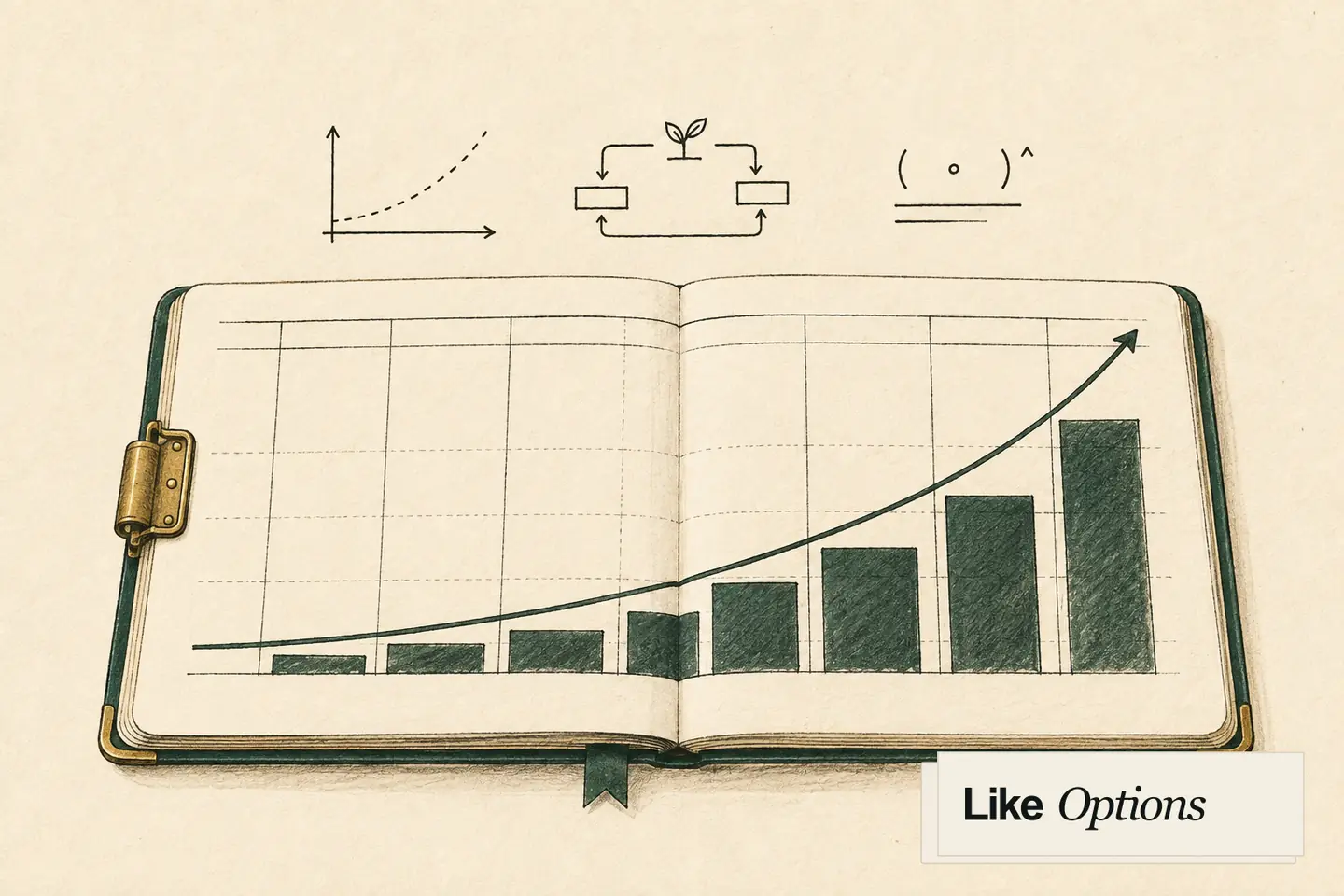
What compounds
With simple interest, the original principal earns interest. With compound interest, previously calculated interest remains in the balance and can itself earn a later return. Recurring deposits add another layer: each deposit has a different amount of time to grow.
That is why two people contributing the same total amount can finish with different balances when one starts earlier or contributes more consistently.
Compound vs simple interest: why the gap widens over time
Simple interest is calculated only on the original principal for every period, so it grows in a straight line — the same dollar amount of interest is added each year. Compound interest is calculated on the principal plus all previously added interest, so each year's interest is calculated on a slightly larger base than the year before. Over a short period the difference between the two is small; over a long period it compounds into a substantial gap, because compound interest is earning returns on returns while simple interest keeps earning at a flat rate.
This is why the length of time an investment is held matters as much as the rate itself. A compound rate that looks unremarkable over five years can produce a dramatically larger balance than the equivalent simple rate over twenty or thirty years — the growing base is doing more work the longer it's left alone.
The three assumptions to inspect
- Rate: an annual rate is an input, not a forecast. Markets and bank products do not deliver a constant return.
- Timing: this site’s recurring-contribution examples use end-of-month contributions unless a page says otherwise.
- Fees and tax: they reduce a real outcome but are excluded from the basic illustration unless explicitly added.
Use the result as a sensitivity tool
Change one input at a time. Compare a lower and higher assumed rate, then compare the effect of delaying contributions. This reveals which assumptions drive the result instead of turning one attractive number into a target.
Test the compound interest calculator ↗ Apply the idea to retirement modelling ↗
Source note: The explanation uses standard future-value and ordinary-annuity mathematics. It is educational information, not investment advice, a guarantee or a product recommendation.